Sustainability- Sustainability is the ability to exist constantly. In the 21st century, it refers generally to the capacity for the biosphere and human civilization to coexist. Wikipedia
Thursday, October 24, 2019
Social Studies
Sustainability- Sustainability is the ability to exist constantly. In the 21st century, it refers generally to the capacity for the biosphere and human civilization to coexist. Wikipedia

Wednesday, October 23, 2019
Act one - Can do task
Vocabulary Find the meanings of the following words: Venture, Vessel, Signior, Mortifying, Profound, Exhortation, Virtuous and Squandered.
Venture- A risky or daring journey or undertaking.
Vessel- A ship or a large boat
Signior- An Italian man usually of rank or gentility —used as a title equivalent to Mr.
Mortifying- causing great embarrassment or shame.
Profound- (of a state, quality, or emotion) very great or intense.
Exhortation- An address or communication emphatically urging someone to do something.
Virtuous- Having or showing high moral standards.
Squandered- Waste (something, especially money or time) in a reckless and foolish manner.
Monday, October 21, 2019
Saffron 2 - English
1. Paragraph 1 is mainly about:
- a. Bowling balls, slides and smooth surfaces. ✗ (c). How smooth surface produces less friction ✓
2. Without friction, cars would find it difficult to:
- a. Stop. ✓
3. Which of the following parts of Experiment 1 happened last?
- c. The eraser slid down the wooden board. ✗ (a). The stone rolled down the metal tray✓
4. Which of the word could replace sleek in Paragraph 1?
- a. Slope✓
5. You can conclude the object moved sooner on the metal tray because:
- c The tray's surface was smoother.✓
6. The tennis ball did not spin as easily as the rubber ball because it:
- b. had a rougher surface.✓
7. This text was written as a:
- a. Procedure ✓
8. If the studs on a football player's boot wore down, he or she would be likely to:
- b. slide and fall over.✓
9. What kind of weather condition causes drivers to put chains on their tyre's?
- c. Snowy.✓
10. The pronoun them in Paragraph 3 refers to:
- b. car tyres ✓
11. The Experiment are similar because they both involve:
- a. Friction. ✓
12. Which state is a fact, not an opinion?
- c. Friction is an invisible force.✓
Friday, September 27, 2019
Science - microscope -
'Microscope'
A microscope is an instrument used to see objects that are too small to be seen by the naked eye. Microscopy is the science of investigating small objects and structures using such an instrument. Microscopic means invisible to the eye unless aided by a microscope.
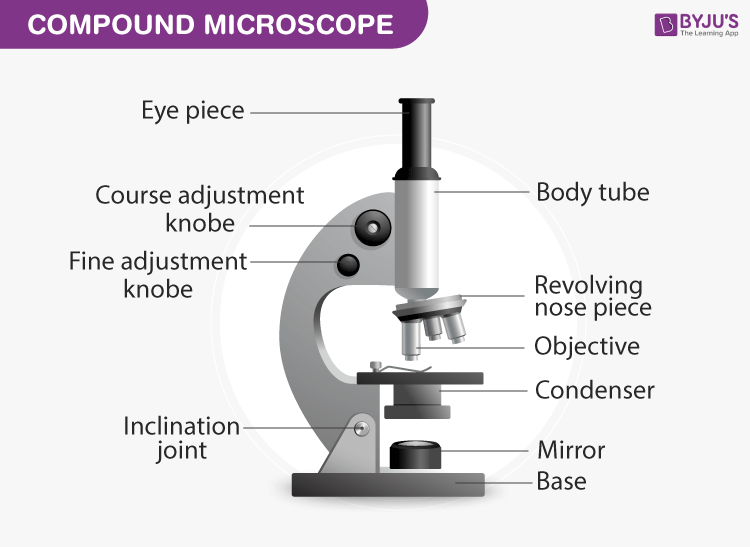
- Parts and Function -
Eyepiece - The objective lens or mirror collects light and brings it to focus creating an image. The eyepiece is placed near the focal point of the objective to magnify this image.
Course adjustment - The coarse adjustment knob located on the arm of the microscope moves the stage up and down to bring the specimen into focus. The gearing mechanism of the adjustment produces a large vertical movement of the stage with only a partial revolution of the knob.
Fine adjustment - This knob is inside the coarse adjustment knob and is used to bring the specimen into sharp focus under low power and is used for all focusing when using high power lenses. Light Source - The light source in your microscope is a lamp that you turn on and off using a switch.
Neck - used to carry the microscope, structural element that connects the head of the microscope to the base.
Stage - The flat platform that supports the slides.
Stage clips - Stage clips hold the slides in place.
Light source - Illuminator: A steady light source (110v) used in place of a mirror. If your microscope has a mirror, it is used to reflect light from an external light source up through the bottom of the stage.
Base - Used for support.
Science - cells -
Cells are very small. They are the basic building blocks of all animals and plants. Although all animals and plants are made of a cell, their cells are quite different.
Cells are made up of different part, called organelles ( meaning 'small organs').
It is easier to see the major organelles using simplified diagrams.
Organelles are structures within a cell that perform specific functions like controlling cell growth and producing energy. Plant and animal cells can contain similar types of organelles.
Within the cytoplasm, the major organelles and cellular structures include nucleolus, nucleus, ribosome, vesicle, rough endoplasmic reticulum, Golgi apparatus, cytoskeleton, smooth endoplasmic reticulum, mitochondria, vacuole, cytosol, lysosome and centriole.
Plant cells have a regular, box-like shape.
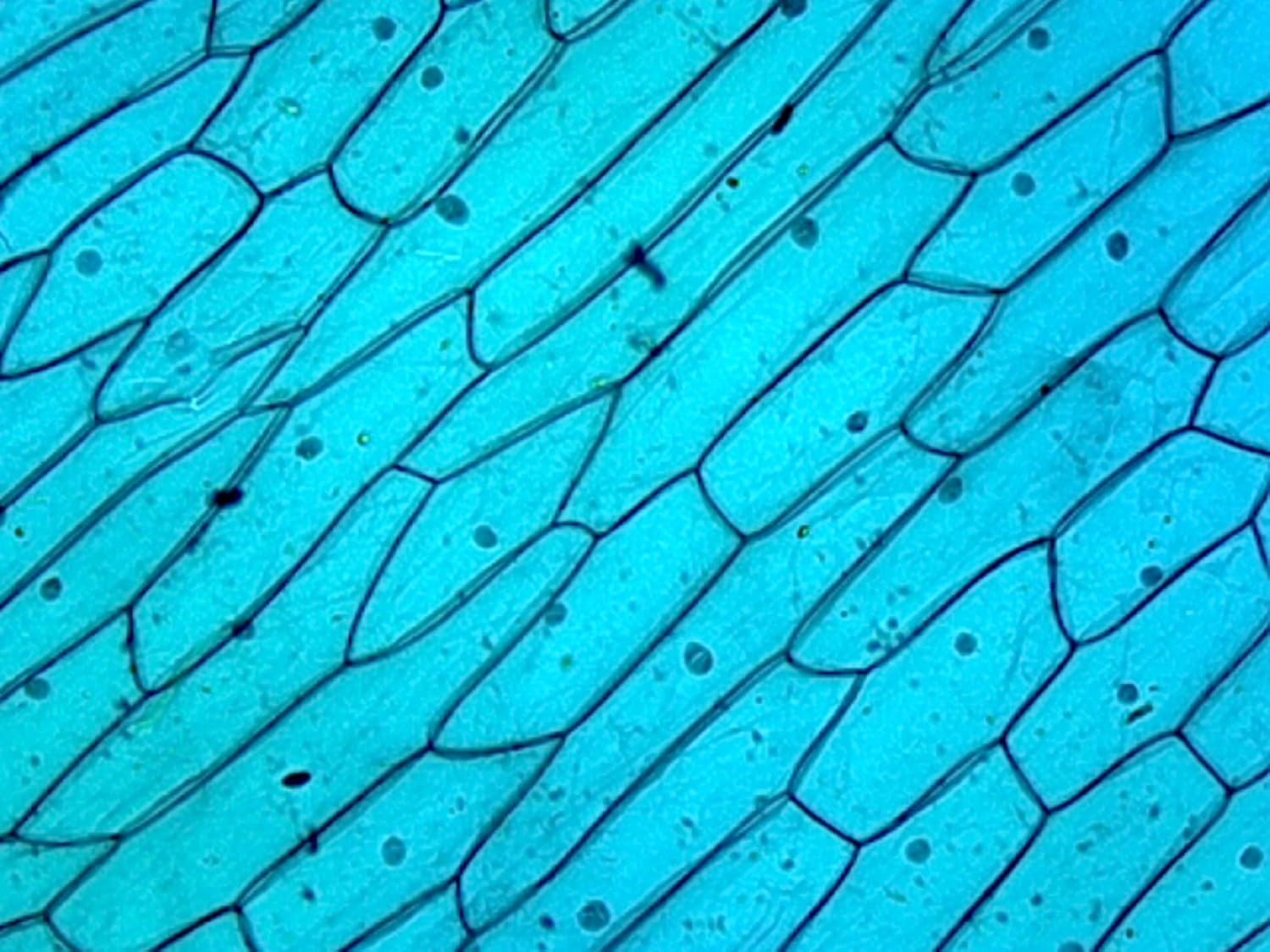
This is a plant cell under a microscope.
Animal cells usually have an irregular shape.

This is an animal cell under a microscope
Wednesday, September 25, 2019
Subscribe to:
Posts (Atom)